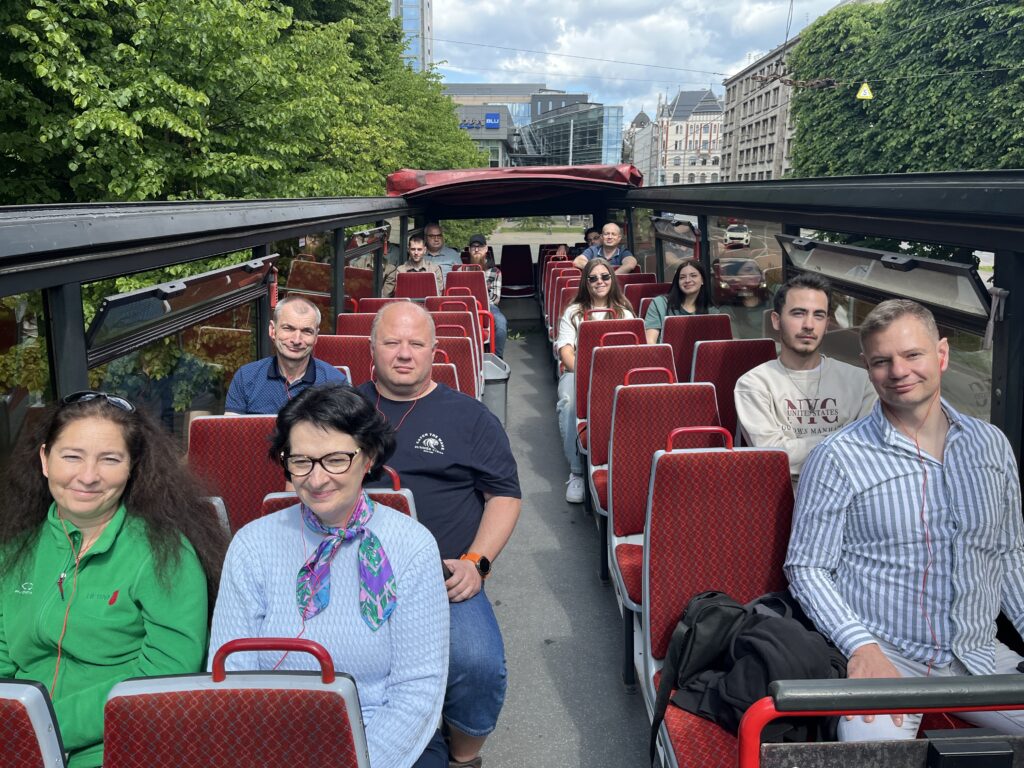
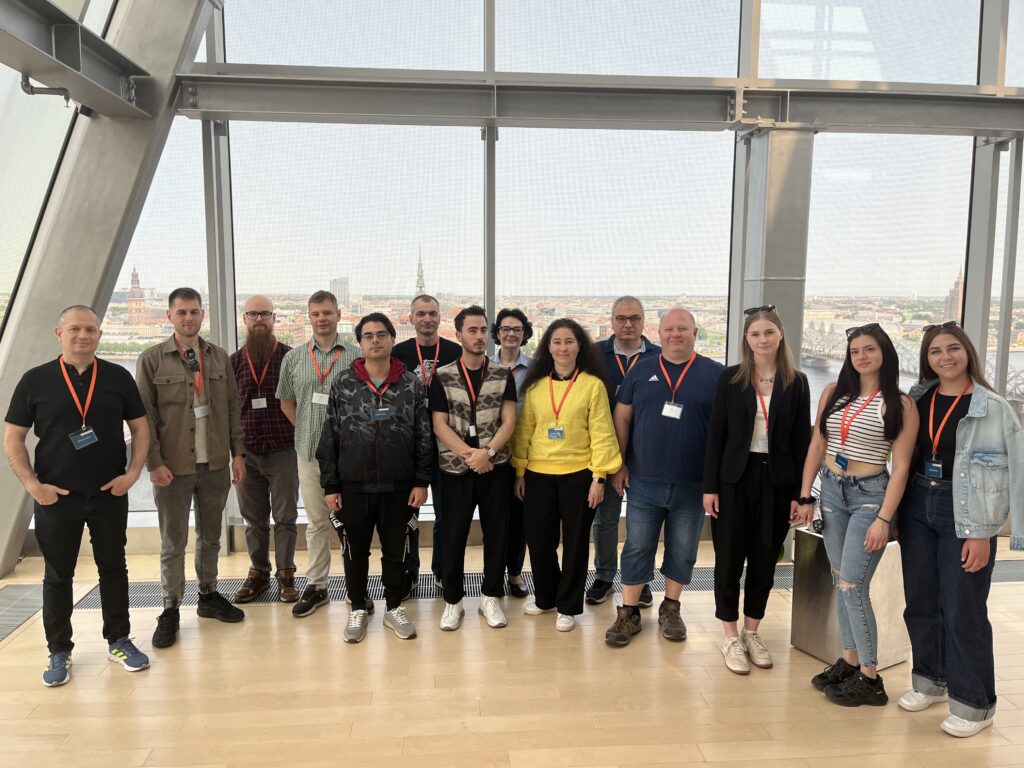
Hungary 2025

Approximately 160 researchers from 14 countries participated in an international conference organized by the Apáczai Csere János Faculty of Pedagogy, Humanities, and Social Sciences at Széchenyi István University (22-24 May 2025). The event focused on the technological, educational and societal challenges of a changing world, addressing topics such as artificial intelligence, digital transformation, and sustainability.

In her opening address, Dr Eszter Lukács, Vice President for International Affairs and Strategic Relations at the University, emphasized that the publications based on the conference presentations would appear in esteemed international journals, significantly contributing to the University’s academic output. “The aim of the conference is to provide a scientific platform for researchers, professionals and decision-makers to explore solutions to the complex challenges of today’s rapidly evolving world,” she stated. “Accordingly, it focuses on crucial topics such as digital transformation, the importance of international collaboration, cybersecurity, and sustainable development—areas that Széchenyi István University treats as strategic priorities in both its educational and research initiatives.”

Mg. iur., Mg oec. Jānis Klieders

Director of study programme “Human resource management”

Photo: Bettina Korinek

My Digital Me

Participation in the ERASMUS + programme in Burgas, Bulgaria (04.06.2025-08.06.2025) became one of the highlights of this year’s study. The theme “My Digital Me” seemed very topical, and we were excited to participate in workshops on the recognition of fake profiles and fake news, the importance of digital identity, and how to protect ourselves online.

In conclusion, we prepared a presentation in the group on “Know to Protect Yourself — A Guideline to Digital Self-Defense”, which helped to better understand the basics of digital security.

Anastasija Metlicka, Gunita Freiberga

2025 ERASMUS + mobility for staff and students

For one week, from June 2 to June 6, 2025, we studied in depth the role of cybersecurity in the context of achieving sustainability goals. Mobility participants from Bulgaria and Lithuania learned the basics of cybersecurity, looked at data protection issues, discussed critical infrastructure and sustainable technologies. We undoubtedly addressed topics about cybersecurity threats and defence strategies, as well as cybersecurity culture.

Lithuania 2025

I gained great experience taking part in the 22 nd International week “Cultural Mosaic in Education” at Klaipeda State College in Lithuania, where we were 35 participants from 15 different countries. Students were offered a unique opportunity to attend inspirational lectures from foreign professors. Participants of the International week also participated in dynamic workshops, seminars and presentations. As part of the event, an international conference was held that added even more depth to discussions on global education and cultural diversity.

I had the opportunity to lecture staff management program students on April 9 about environmental protection, sustainable Development Administration and legal Design thinking. Possible topics for publications were also discussed.

Mg.iur. Nikolajs Ozoliņš

Lecturer of College of Law

2025 ERASMUS + mobility for students: Cyber security

At the College of Law from 26 May to 30 May 2025, we invited students from foreign universities to the Erasmus + Combined intensive Programme (BIP) to address in depth the role of cybersecurity in achieving sustainability goals.

Anna Szynkiewic

With a guest lecture on the interface between Polish, Baltic and Eastern European cultures, the college was visited by Anna Szynkiewic, a college’s junior collaborator, a doctoral fellow at the Akademia Kujawsko-Pomorska. The lecturer received special thanks for the revelation of this topic from our foreign students (16.04.2025).

Berkan Celik

A lecturer from Turkey Berkan Celik showed a genuine interest in our experience of using artificial intelligence in the study process. Pictured: a guest in conversation with our lecturer Normunds Pauders. From: Van Yuzuncu Yil University, 7.05.2025.

Sustainable Blue Economy

This year we had the opportunity in Bulgaria to participate in the ERASMUS + project “Sustainable Blue Economy”. As part of the project, we worked with students from other countries in creative activities, attended the LEGO tournament and produced presentations on the development of a sustainable blue economy.

We had the opportunity to develop our presentations on a sustainable blue economy at the International Student Scientific Conference hosted by the Free University of Burgas, then turn them into research works to be published in the Student Conference Article collection this autumn.

Madara Straupe, Guna Rasa, Aleksandra Priedīte

Personnel mobility

ERASMUS+ program with educational mobility opportunities supports and encourages the international mobility of the higher education institution personnel:

– Teaching when lecturers of higher education institutions and their guest speakers from companies go to one of the higher education institutions abroad;

– Personnel training, where the professional development of the staff of higher education institutions is implemented, ensuring participation in training, observation of work in a foreign higher education institution or other appropriate organization.

Objectives of the educational mobility are:
– to give the opportunity to higher education institution personnel to gain knowledge and specific skills, by learning from the experience of foreign partners and good practice, and how to improve practical skills, needed in the current work and professional development;
– to encourage the higher education institutions to expand and improve the range and content of the offered study courses;
– to allow the students, who do not have the possibility to participate in the mobility program, to benefit from knowledge and experience, provided by the academic personnel of other European higher education institutions and foreign guest speakers from companies;
– to encourage exchange of knowledge and pedagogical methods between European higher education institutions;
– to create link between higher education institutions and companies;
– to help developing cooperation between higher education institutions and companies;
– to motivate students and personnel to get involved in mobility and help to prepare for the mobility period.

Funding. Participant of educational mobility shall receive funding for activities from his / her university. Individuals may not apply individually for funding. Funding is assigned for: accommodation costs; travelling costs;  administrative costs.

Mobility period: Minimum duration – 2 days, maximum duration – 2 months (excluding travelling days);

At least 8 academic lecture hours per week (or shorter period) shall be held during teaching activity.

Educational mobility is implemented in one of the Erasmus+ program countries. 34 countries participate in the program at the moment: 28 European Union Member States(Austria, Belgium, Bulgaria, Czech Republic, Denmark, France, Greece, Croatia, Estonia, Italy, Ireland, Cyprus, Latvia, United Kingdom, Lithuania, Luxembourg, Malta, Netherlands, Poland, Portugal, Romania, Slovakia, Slovenia, Finland, Spain, Hungary, Germany, Sweden); Member States of the European Economic Area (Iceland, Norway, Liechtenstein and Switzerland participating in the program as a partner country); EU candidate countries (Turkey, North Macedonia).

©2026. Juridiskā koledža. Visas tiesības aizsargātas.

Izstrādāja: